
Oh, my gosh...
Vue.jsのPropsって親コンポーネントから子コンポーネントにデータを渡すものだよね?
Vue.jsのPropsと言えば、親コンポーネントから子コンポーネントにデータを渡すものだよね?
Usually, when we need to pass data from the parent to a child component, we use props. However, imagine the case where we have a large component tree, and a deeply nested component needs something from a distant ancestor component. With only props, we would have to pass the same prop across the entire parent chain:
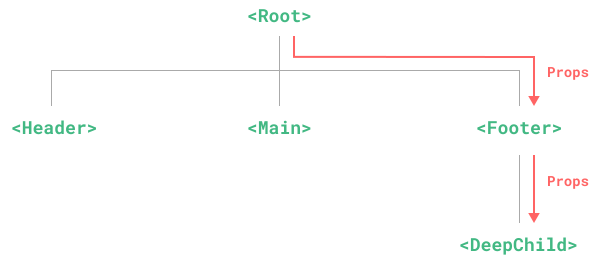
https://vuejs.org/guide/components/provide-inject.html#prop-drilling
⇧ 一般的に、我々は、Propsを使う必要があるって言ってますね。
Vue.jsのPropsは自分自身に渡せるらしい
そんな定説を覆すコードがあったとさ。
<template>
  {{my_array}}
  <my-component :my_counter="compA()">
</template>

<script>
module.exports = {
  props: ['my_counter'],
  name: 'my-component',
  computed: {
    compA() {
       const my_counter = this.my_counter ? this.my_counter : [];
       let my_array = [name: "static name", counter: my_counter];
       return my_array;
    }
  }
 }
</script>
https://stackoverflow.com/questions/66277762/vue-js-recursive-components-data-including-props
⇧ う~む、何度見ても、自コンポーネント内でPropsを定義して、呼び出してらっしゃるように見える...
と言うのも、
⇧ 上記のコードを見てたら、同じく自コンポーネント内でPropsを呼んでらっしゃる気配だったもので。
■vue-admin/vue-typescript-admin-template/src/layout/components/Sidebar/SidebarItem.vue
<template>
  <div
    v-if="!item.meta || !item.meta.hidden"
    :class="[isCollapse ? 'simple-mode' : 'full-mode', {'first-level': isFirstLevel}]"
  >
    <template v-if="!alwaysShowRootMenu && theOnlyOneChild && !theOnlyOneChild.children">
      <sidebar-item-link
        v-if="theOnlyOneChild.meta"
        :to="resolvePath(theOnlyOneChild.path)"
      >
        <el-menu-item
          :index="resolvePath(theOnlyOneChild.path)"
          :class="{'submenu-title-noDropdown': isFirstLevel}"
        >
          <svg-icon
            v-if="theOnlyOneChild.meta.icon"
            :name="theOnlyOneChild.meta.icon"
          />
          <span
            v-if="theOnlyOneChild.meta.title"
            slot="title"
          >{{ $t('route.' + theOnlyOneChild.meta.title) }}</span>
        </el-menu-item>
      </sidebar-item-link>
    </template>
    <el-submenu
      v-else
      :index="resolvePath(item.path)"
      popper-append-to-body
    >
      <template slot="title">
        <svg-icon
          v-if="item.meta && item.meta.icon"
          :name="item.meta.icon"
        />
        <span
          v-if="item.meta && item.meta.title"
          slot="title"
        >{{ $t('route.' + item.meta.title) }}</span>
      </template>
      <template v-if="item.children">
        <sidebar-item
          v-for="child in item.children"
          :key="child.path"
          :item="child"
          :is-collapse="isCollapse"
          :is-first-level="false"
          :base-path="resolvePath(child.path)"
          class="nest-menu"
        />
      </template>
    </el-submenu>
  </div>
</template>

<script lang="ts">
import path from 'path'
import { Component, Prop, Vue } from 'vue-property-decorator'
import { RouteConfig } from 'vue-router'
import { isExternal } from '@/utils/validate'
import SidebarItemLink from './SidebarItemLink.vue'

@Component({
  // Set 'name' here to prevent uglifyjs from causing recursive component not work
  // See https://medium.com/haiiro-io/element-component-name-with-vue-class-component-f3b435656561 for detail
  name: 'SidebarItem',
  components: {
    SidebarItemLink
  }
})
export default class extends Vue {
  @Prop({ required: true }) private item!: RouteConfig
  @Prop({ default: false }) private isCollapse!: boolean
  @Prop({ default: true }) private isFirstLevel!: boolean
  @Prop({ default: '' }) private basePath!: string

  get alwaysShowRootMenu() {
    if (this.item.meta && this.item.meta.alwaysShow) {
      return true
    }
    return false
  }

  get showingChildNumber() {
    if (this.item.children) {
      const showingChildren = this.item.children.filter((item) => {
        if (item.meta && item.meta.hidden) {
          return false
        } else {
          return true
        }
      })
      return showingChildren.length
    }
    return 0
  }

  get theOnlyOneChild() {
    if (this.showingChildNumber > 1) {
      return null
    }
    if (this.item.children) {
      for (const child of this.item.children) {
        if (!child.meta || !child.meta.hidden) {
          return child
        }
      }
    }
    // If there is no children, return itself with path removed,
    // because this.basePath already conatins item's path information
    return { ...this.item, path: '' }
  }

  private resolvePath(routePath: string) {
    if (isExternal(routePath)) {
      return routePath
    }
    if (isExternal(this.basePath)) {
      return this.basePath
    }
    return path.resolve(this.basePath, routePath)
  }
}
</script>

<style lang="scss">
.el-submenu.is-active > .el-submenu__title {
  color: $subMenuActiveText !important;
}

.full-mode {
  .nest-menu .el-submenu>.el-submenu__title,
  .el-submenu .el-menu-item {
    min-width: $sideBarWidth !important;
    background-color: $subMenuBg !important;

    &:hover {
      background-color: $subMenuHover !important;
    }
  }
}

.simple-mode {
  &.first-level {
    .submenu-title-noDropdown {
      padding: 0 !important;
      position: relative;

      .el-tooltip {
        padding: 0 !important;
      }
    }

    .el-submenu {
      overflow: hidden;

      &>.el-submenu__title {
        padding: 0px !important;

        .el-submenu__icon-arrow {
          display: none;
        }

        &>span {
          visibility: hidden;
        }
      }
    }
  }
}
</style>

<style lang="scss" scoped>
.svg-icon {
  margin-right: 16px;
}

.simple-mode {
  .svg-icon {
    margin-left: 20px;
  }
}
</style>
■vue-admin/vue-typescript-admin-template/src/layout/components/Sidebar/index.vue
<template>
  <div :class="{'has-logo': showLogo}">
    <sidebar-logo
      v-if="showLogo"
      :collapse="isCollapse"
    />
    <el-scrollbar wrap-class="scrollbar-wrapper">
      <el-menu
        :default-active="activeMenu"
        :collapse="isCollapse"
        :background-color="variables.menuBg"
        :text-color="variables.menuText"
        :active-text-color="menuActiveTextColor"
        :unique-opened="false"
        :collapse-transition="false"
        mode="vertical"
      >
        <sidebar-item
          v-for="route in routes"
          :key="route.path"
          :item="route"
          :base-path="route.path"
          :is-collapse="isCollapse"
        />
      </el-menu>
    </el-scrollbar>
  </div>
</template>

<script lang="ts">
import { Component, Vue } from 'vue-property-decorator'
import { AppModule } from '@/store/modules/app'
import { PermissionModule } from '@/store/modules/permission'
import { SettingsModule } from '@/store/modules/settings'
import SidebarItem from './SidebarItem.vue'
import SidebarLogo from './SidebarLogo.vue'
import variables from '@/styles/_variables.scss'

@Component({
  name: 'SideBar',
  components: {
    SidebarItem,
    SidebarLogo
  }
})
export default class extends Vue {
  get sidebar() {
    return AppModule.sidebar
  }

  get routes() {
    return PermissionModule.routes
  }

  get showLogo() {
    return SettingsModule.showSidebarLogo
  }

  get menuActiveTextColor() {
    if (SettingsModule.sidebarTextTheme) {
      return SettingsModule.theme
    } else {
      return variables.menuActiveText
    }
  }

  get variables() {
    return variables
  }

  get activeMenu() {
    const route = this.$route
    const { meta, path } = route
    // if set path, the sidebar will highlight the path you set
    if (meta.activeMenu) {
      return meta.activeMenu
    }
    return path
  }

  get isCollapse() {
    return !this.sidebar.opened
  }
}
</script>

<style lang="scss">
.sidebar-container {
  // reset element-ui css
  .horizontal-collapse-transition {
    transition: 0s width ease-in-out, 0s padding-left ease-in-out, 0s padding-right ease-in-out;
  }

  .scrollbar-wrapper {
    overflow-x: hidden !important;
  }

  .el-scrollbar__view {
    height: 100%
  }

  .el-scrollbar__bar {
    &.is-vertical {
      right: 0px;
    }

    &.is-horizontal {
      display: none;
    }
  }
}
</style>

<style lang="scss" scoped>
.el-scrollbar {
  height: 100%
}

.has-logo {
  .el-scrollbar {
    height: calc(100% - 50px);
  }
}

.el-menu {
  border: none;
  height: 100%;
  width: 100% !important;
}
</style>
⇧ 親コンポーネントの方でも呼んでるっぽいけど、子コンポーネント自身でもPropsを呼んでるっぽいのよね...
う~む、Vue.js、相変わらずカオスな気がする...
ドキュメント見たけども、
⇧ 親コンポーネント→子コンポーネント、以外の使い方もあるってことなんかな?
毎度モヤモヤ感が半端ない...
今回はこのへんで。
